IRENE PARDO SIERRA
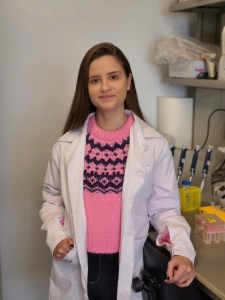
Irene Pardo studied Biotechnology at the Universidad Francisco de Vitoria. In 2020, she did her internship for her Final Degree Project at the Department of Biochemistry and Molecular Biology of the Miller School of Medicine in Miami (USA) for 6 months, under the supervision of Dr. Sylvia Daunert. There she worked on a biosensor based on nanoantibodies targeting prostate-specific membrane antigen (PSMA) for the early diagnosis of prostate cancer in liquid biopsies. In addition, during the pandemic, she was also involved in the development of an RT-RPA-based lateral flow test for the detection of SARS-CoV2.
Later, she continued her studies by obtaining a Master’s degree in Translational Medicine Research at the Faculty of Medicine at the Universidad Complutense de Madrid and completed her Master’s thesis in which she studied the lncRNA FOXD3-AS1 as a therapeutic target for breast cancer at IMDEA Nanoscience, under the supervision of Prof. Álvaro Somoza. Currently, she has started her PhD studies in the Biology Program at the University Autonoma of Madrid, in Prof. Álvaro Somoza’s nanobiotechnology group at IMDEA Nanoscience. Her thesis will focus on “Targeting Non-Coding RNAs Using Nanoparticle-Delivered Nucleic Acid Therapeutics In Cancer”, in which she proposes cancer therapies based on the use of oligonucleotides that regulate the expression of non-coding RNAs involved in oncogenic processes. In addition, different nanoparticles will be studied to achieve targeted and effective treatment delivery.

E-mail: irene.pardo@imdea.org
GUILLERMO GUTIÉRREZ LÓPEZ
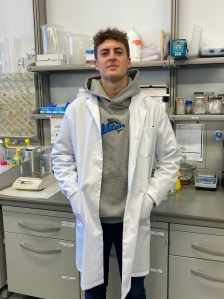
Guillermo Gutiérrez López studied Pharmacy at the Universidad Complutense de Madrid. In 2021, he obtained his Master´s in Pharmaceutical Design and Engineering at the Technical University of Denmark (DTU) (Denmark). During this period, he participated in a myriad of projects regarding drug delivery, especially liposomes for encapsulating chemotherapeutics and antibiotics. He completed his Master´s thesis about the Development and evaluation of a novel polymeric platform encapsulating immune-stimulatory molecules for immunotherapeutic applications under the supervision of Dr. Thomas L. Andresen, Dr. Gael Claergoud, and Dr. Sven Weller.
In 2022, he was moved by his interest in drug delivery and immunotherapy, he started working at IMDEA Energy for Patricia Horcajada’s research group. He was in charge of investigating the cytokine profile produced by SARS-CoVID, studying how these molecules could be useful as therapy moieties, and ultimately, designing a novel multi-therapy platform regarding an antiviral drug, cytokines, and metallic organic framework (MOF).
Currently, he has started her PhD studies in the Advanced Material and Nanotechnology Program at the University Autonoma of Madrid, in Prof. Álvaro Somoza’s nanobiotechnology group at IMDEA Nanoscience. Her thesis will focus on “Optimization of nucleic acid nanoformulations by artificial intelligence,” in which he proposes a novel method for the optimal method to design oligonucleotide sequences to obtain better encapsulation efficiency. In the future, this information will allow a better design of therapies based on nanoformulations to cure various diseases.
Email: guillermo.glopez@imdea.org
DENISE MARIA CUSCELA
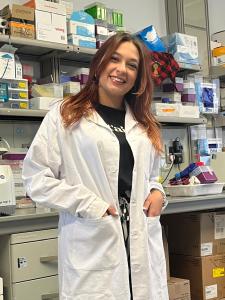
Denise Maria Cuscela obtained her Bachelor’s degree in Biological Sciences from the University of Bari in 2018. During this period, she gained her first laboratory experience in molecular and cellular biology, acquiring practical skills in techniques such as spectrophotometry, SDS-PAGE, Western blotting, and fluorescence microscopy. Her undergraduate thesis focused on the intestinal transport of amino acids.
In 2019, she joined Janssen Pharmaceutica (Johnson & Johnson, Belgium) as a laboratory technician, where she worked in a GMP environment on the development and validation of Raman spectroscopy-based methods for the identification of raw materials and pharmaceutical products.
Motivated to further specialize in biomedical research, she pursued a Master’s degree in Translational Biomedical Sciences, which she completed in 2024. During her studies, she was awarded an Erasmus+ grant to carry out a research internship at the Complutense University of Madrid. There, she investigated the role of the pseudokinase TRIB3 in prostate cancer progression, using both in vitro (PC3 and DU145 cell lines) and in vivo models. Her work included migration and invasion assays, molecular analyses, and the management and genotyping of genetically modified mouse models.
Since January 2025, she is a PhD researcher at the IMDEA Nanoscience Institute. Her research focuses on the development of nanomedicine-based strategies for the diagnosis and treatment of cancers with limited therapeutic options. In particular, her work involves the design and functionalization of inorganic nanoparticles with nucleic acids, such as aptamers, miRNAs, and antisense oligonucleotides.
Email: denise.cuscela@imdea.org
VU PHONG DINH
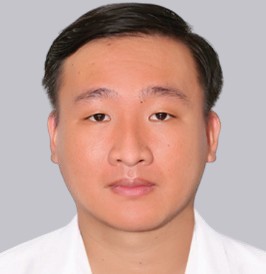
My name is Vu Phong Dinh and I obtained my Bachelor’s degree in Biotechnology from Can Tho University, Vietnam. I then completed my Master’s degree in Bionanotechnology at Gachon University, Republic of Korea.
Currently, I am pursuing my Ph.D. in Molecular Biosciences (Medicine) at Universidad Autónoma de Madrid, Spain. My research focuses on nucleic acid-based therapies for Duchenne muscular dystrophy and nanoparticle-based delivery systems.
Email: vu.phong@imdea.org
AMMARA SAFDAR

I completed my Bachelor’s degree in Nanoscience and Nanotechnology at Preston University, Islamabad, Pakistan, where I developed a strong foundation in materials science and nanotechnology.
I then obtained my Master’s degree in Nanoscience and Technology from the University of the Chinese Academy of Sciences (UCAS), conducting research at the National Center for Nanoscience and Technology (NCNST) on platelet membrane-coated polymer nanoparticles for enhanced hemostasis. I also gained international experience as a research fellow at iThemba LABS, South Africa, where I worked on the green synthesis of metal oxide nanoparticles to study their electric and magnetic applications.
Currently, I am a pre-doctoral researcher at IMDEA Nanociencia under the IDEAL PhD Fellowship (MSCA-COFUND Programme) and a PhD candidate in Advanced Materials and Nanotechnology at the Autonomous University of Madrid, under the supervision of Prof. Álvaro Somoza. My doctoral research focuses on developing albumin nanoparticle-based oligonucleotide delivery systems for lncRNA modulation in uveal melanoma.
Email: ammara.safdar@imdea.org
SERGIO GARRIDO AREAL
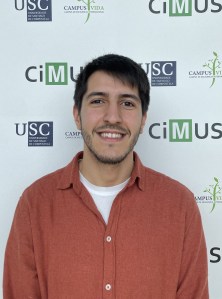
Sergio Garrido Areal obtained a Bachelor’s degree in Biotechnology from the University of Santiago de Compostela in 2022. The same year, he obtained a scholarship to pursue an Erasmus Mundus Joint Master’s Degree in Nanomedicine for Drug Delivery. During this period, he spent time at the Université Paris Cité (France), the University of Patras (Greece)and the Università degli Studi di Pavia (Italy). He carried out his master thesis at Utrecht University (Netherlands), where he worked on the incorporation of endosomal escape peptides into mRNA-LNPs.
In 2024, he began his PhD at the University of Santiago de Compostela under the joint supervision of María José Alonso and Álvaro Somoza, focusing on the development of aptamer-functionalized mRNA-nanocarriers for T cell engineering.
E-mail: sergio.garrido.areal@usc.es

