ARTURO GONZÁLEZ CAMUÑAS
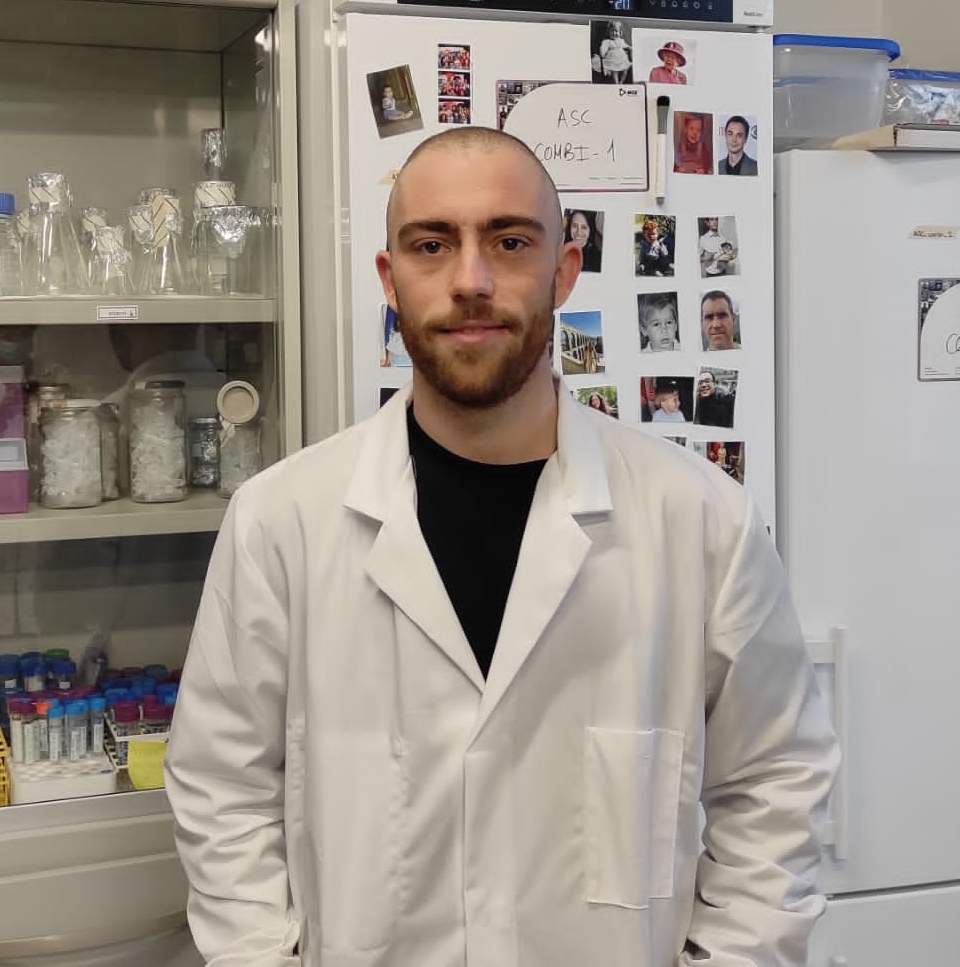
Arturo González Camuñas studied Chemistry at the Universidad Autónoma de Madrid, where he also obtained his master’s degree in Organic Chemistry under the direction of Prof. José Alemán, his work was focused on “Design of new intelligent 2D porous materials” such as: covalent organic frameworks ( COFs)”.
Later, he was working in a the chemical industry Ercros, where he developed guarantee and quality control functions.
Next, he was hired as a research assistant at Universidad Rey Juan Carlos under the supervision of Victoria Morales Perez. His work was focused on: “Design of magnetic mesoporous silica nanoparticles as vehicles with biomedical applications”.
He currently has started his industrial PhD studies at IMDEA Nanociencia and Alodia pharmaceutics under the supervision of Prof. Álvaro Somoza. His thesis is focused on the development of a sensor based on gold nanoparticles for the diagnosis of infectious diseases.
E-mail: arturo.gonzalez@imdea.org

MARÍA LÓPEZ VALLS
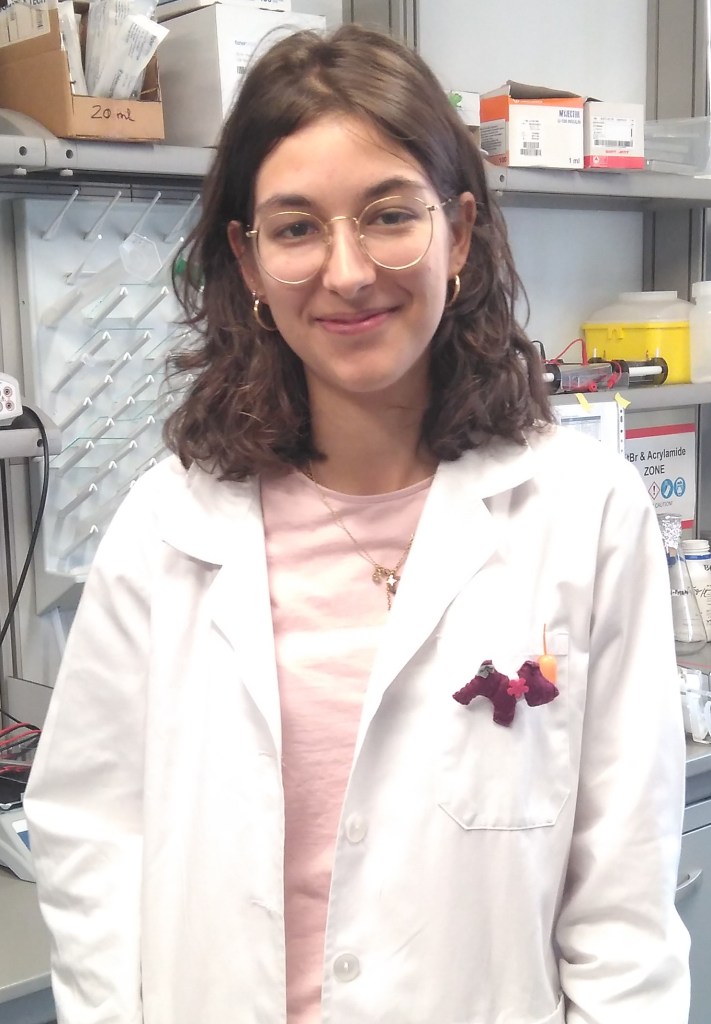
María López studied Biotechnology at Universidad de Murcia. In 2017, she did an internship in the biochemistry department of Technische Universität Dresden. There, she worked in a project titled “Production of new bioactive compounds by plants and bacteria using new and improved halogenases” under the supervision of Dr Karl-Heinz van Pée and Dr Eugenio Patallo. In 2018, she started her Master on Advanced Biomedical Sciences at the University of the West of Scotland (United Kingdom). During her Master thesis, she studied the role of different isoforms of RUNX1 in Acute Myeloid Leukemia.
Currently and since 2019, she is carrying out her PhD at IMDEA Nanociencia under the supervision of Dr Begoña Sot.
E-mail: marialopez.valls@imdea.org
CATARINA CASTANHEIRA
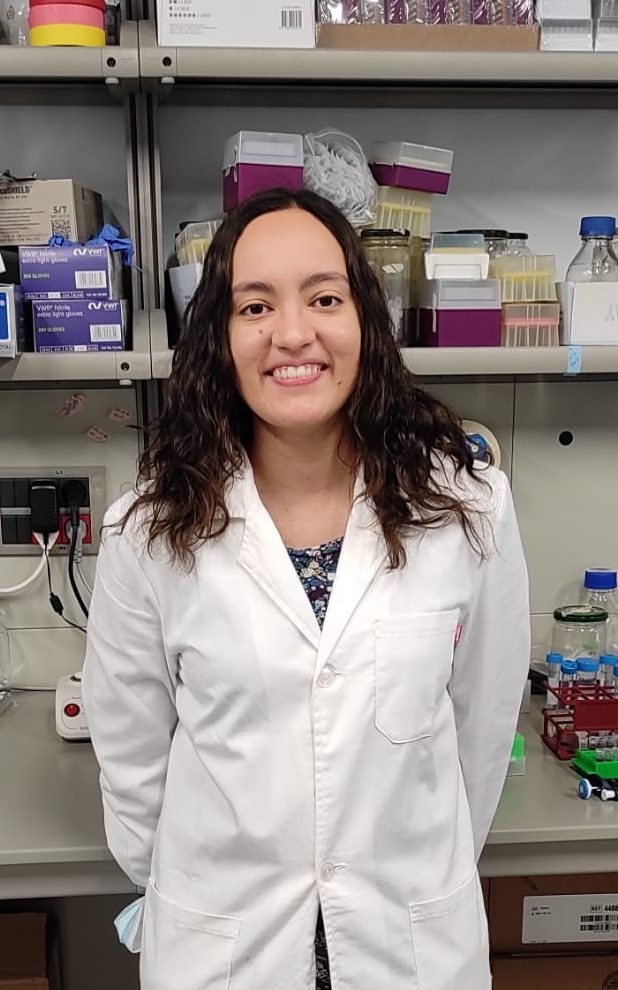
Catarina Castanheira was born in Lisbon (Portugal) in 1994. In 2012 she moved from Braga (Portugal) to Porto (Portugal) to enroll the Integrated Master in Bioengineering at the University of Porto. In 2015 she conducted a training period in REQUIMTE Research Lab (Chemistry and Biochemistry Department, Faculty of Sciences, University of Porto), in the group of Dr. Maria Rangel, which involved the use of pyridinone‑dansyl complexes as sensors for metal ions. In 2016 she conducted a 5 month internship at IMDEA Nanociencia, in the group of Dr. Álvaro Somoza, where she developed nanobiosensors based on gold nanoparticles for the detection cancer‑related miRNAs. In 2017, Catarina started her Master Dissertation project at the Nanomedicines & Translational Drug Delivery group in i3S/INEB (Institute of Investigation and Innovation in Heath / Institute of Biomedical Engineering), University of Porto, supervised by Dr. José das Neves and Dr. Bruno Sarmento. There she developed functionalized polymeric nanoparticles for the topical delivery of anti-HIV microbicides. Catarina obtained her MSc Degree in Bioengineering – Molecular Biotechnology in October 2017 and after that she continued her work at the Nanomedicines & Translational Drug Delivery group. In March 2018, driven by her interest in inorganic nanostructures for diagnostics and therapy, she came back to IMDEA as a visiting student. In April 2019, she started to work as technician in the RENIM Project to modify magnetic nanoparticles with different molecules for diagnostics and imaging. Since September 2019, she is carrying out her PhD, with an AECC fellowship, under the supervision of Dr. Álvaro Somoza and Dr. Milagros Castellanos. Her work focuses on the use of gold nanoparticles for cancer diagnosis and gene therapy.
catarina.coutinho@imdea.org
IRENE PARDO SIERRA
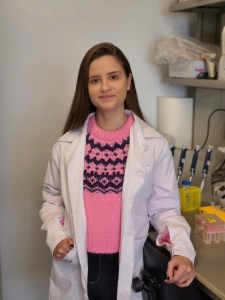
Irene Pardo studied Biotechnology at the University Francisco de Vitoria. In 2020, she did her internship for her Final Degree Project at the Department of Biochemistry and Molecular Biology of the Miller School of Medicine in Miami (USA) for 6 months, under the supervision of Dr. Sylvia Daunert. There she worked on a biosensor based on nanoantibodies targeting prostate-specific membrane antigen (PSMA) for the early diagnosis of prostate cancer in liquid biopsies. In addition, during the pandemic, she was also involved in the development of an RT-RPA-based lateral flow test for the detection of SARS-CoV2.
Later, she continued her studies by obtaining a Master’s degree in Translational Medicine Research at the Faculty of Medicine at the University Complutense of Madrid and completed her Master’s thesis in which she studied the lncRNA FOXD3-AS1 as a therapeutic target for breast cancer at IMDEA Nanoscience, under the supervision of Prof. Álvaro Somoza. Currently, she has started her PhD studies in the Biology Program at the University Autonoma of Madrid, in Prof. Álvaro Somoza’s nanobiotechnology group at IMDEA Nanoscience. Her thesis will focus on “Long non-coding RNAs as therapeutic targets in cancer”, in which she proposes a cancer therapy based on the use of oligonucleotides that decrease the expression of oncogenic long non-coding RNAs. In addition, different nanoparticles will be studied to achieve targeted and effective treatment delivery.
E-mail: irene.pardo@imdea.org
GUILLERMO GUTIÉRREZ LÓPEZ
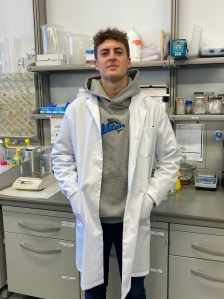
Guillermo Gutiérrez López studied Pharmacy at the Universidad Complutense de Madrid. In 2021, he obtained his Master´s in Pharmaceutical Design and Engineering at the Technical University of Denmark (DTU) (Denmark). During this period, he participated in a myriad of projects regarding drug delivery, especially liposomes for encapsulating chemotherapeutics and antibiotics. He completed his Master´s thesis about the Development and evaluation of a novel polymeric platform encapsulating immune-stimulatory molecules for immunotherapeutic applications under the supervision of Dr. Thomas L. Andresen, Dr. Gael Claergoud, and Dr. Sven Weller.
In 2022, he was moved by his interest in drug delivery and immunotherapy, he started working at IMDEA Energy for Patricia Horcajada’s research group. He was in charge of investigating the cytokine profile produced by SARS-CoVID, studying how these molecules could be useful as therapy moieties, and ultimately, designing a novel multi-therapy platform regarding an antiviral drug, cytokines, and metallic organic framework (MOF).
Currently, he has started her PhD studies in the Advanced Material and Nanotechnology Program at the University Autonoma of Madrid, in Prof. Álvaro Somoza’s nanobiotechnology group at IMDEA Nanoscience. Her thesis will focus on “Optimization of nucleic acid nanoformulations by artificial intelligence,” in which he proposes a novel method for the optimal method to design oligonucleotide sequences to obtain better encapsulation efficiency. In the future, this information will allow a better design of therapies based on nanoformulations to cure various diseases.
guillermo.glopez@imdea.org
 NanoBiotechnology Research Group